
By Lara Charmaine Lagorra
“And the Miss Universe is…”
The crowd roars as the next candidate is crowned to represent the country in the largest and most prestigious international pageant: Miss Universe. For Filipinos, this moment of opportunity serves more than a competition, but a celebration of intelligence, advocacy, and above all, national pride.
Across the Philippines, millions tune in with a sense of unity rarely seen in everyday life. From cities to rural towns, families gather around televisions and phones, waiting in breathless anticipation for their candidate to shine on the stage.
This fascination comes with the country’s love for pageants, tracing back to the long-standing traditions celebrating beauty, community, and cultural identity. Long before Miss Universe became a national spectacle, towns and cities were already crowning their own queens.
Festival muses, who embody the spirit of their specific communities, carry with them the heritage and identity of the people they represent, from the traditions down to the culture of the region.
In the colorful Santacruzan procession, for example, honoring Reyna Elena and the finding of the Holy Cross, embodying grace, devotion, and Filipino heritage. In Negros Oriental, competitions like Hara ng Negros Oriental, Hara ng Dumaguete, and Mutya ng Valencia search for candidates who reflect both beauty and community values.
They become living symbols of culture, carrying the story of their people with every smile and wave.
This tradition naturally evolved into the Philippines’ national obsession with international pageantry. Whenever the country is represented, the people can’t help but take pride in it— rooted in our longing to be recognized for our culture and belief that a Filipino can stand out on the world stage.
It gives Filipinos a sense of platform, which serves as a place for celebration. When a Filipina walks across the Miss Universe stage, she isn’t just competing; she is representing the entire nation.
We pour so much emotion into the pageant, from studying other countries’ candidates to debating gowns, to analyzing catwalks, and dissecting the all-important Q&A like lifelong pageant experts.
Each queen, in her own way, embodies the aspirations of a nation, turning their achievement into a shared celebration of Filipino identity, through their stories and advocacies that connect us.
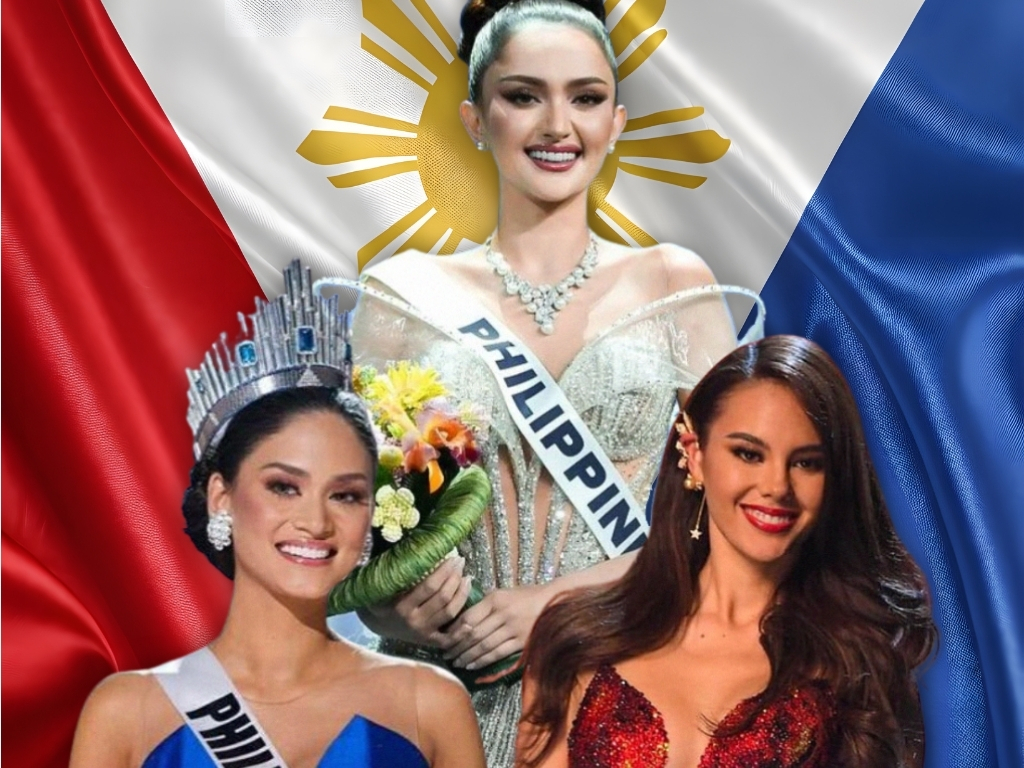
Take Catriona Gray, who overcame repeated rejections and used her platform to champion education and mental health. Pia Wurtzbach, after her long journey in pageantry, leveraged her win to advocate for HIV‑AIDS awareness and women’s rights.
Ahtisa Manalo, who competed from a humble background, joining pageants at the age of ten to support her family, and later dedicated her Miss Universe bid to her late grandmother with her advocacy on youth empowerment and education.
It is as if the entire country is her family, cheering her on from afar. The nation celebrates her achievements and stands behind her every step. She becomes more than a role model for young women; she embodies what it means to carry the country’s honor onto the global stage.
Beyond beauty, the Miss Universe competition allows representation of Filipino blood and identity, with an image of compassion, confidence, and grace. Each candidates’ story is shaped by hardwork, sacrifice, and resilience that resonates deeply with Filipinos.
And when something feels off, especially in the placement of Philippines, Filipinos are quick to speak up—debating the fairness of the competition and turning online platforms into arenas of discourses. But for many, this goes beyond defending the rightful winner but a matter of protecting the integrity of a competition that holds a special place in their hearts.
Showing how the event has connected Filipinos and their obsession with it, it also gives a sense of purpose and thrill that they can be a part of something big.
So whether it’s being confidently beautiful, seeing the silver lining of hardships, or being the hope of the people, the crown does not only sit on the head of the contestant, but on millions of Filipinos together, united to support and honor one of their own.
Miss Universe is not just a pageant—it is a cultural union that reflects the spirit, identity, and heart of the nation.