
On Marshall McLuhan Forum ‘26
By AC Putong
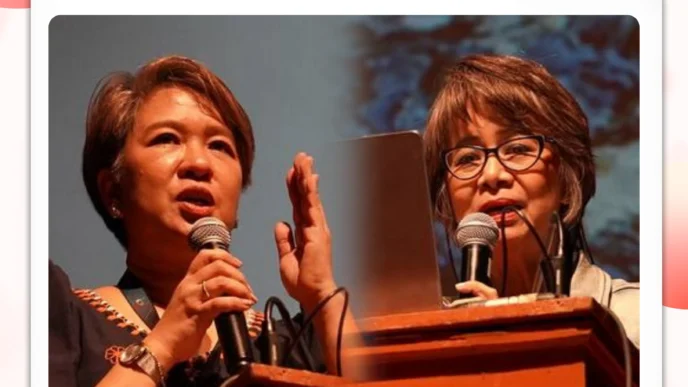
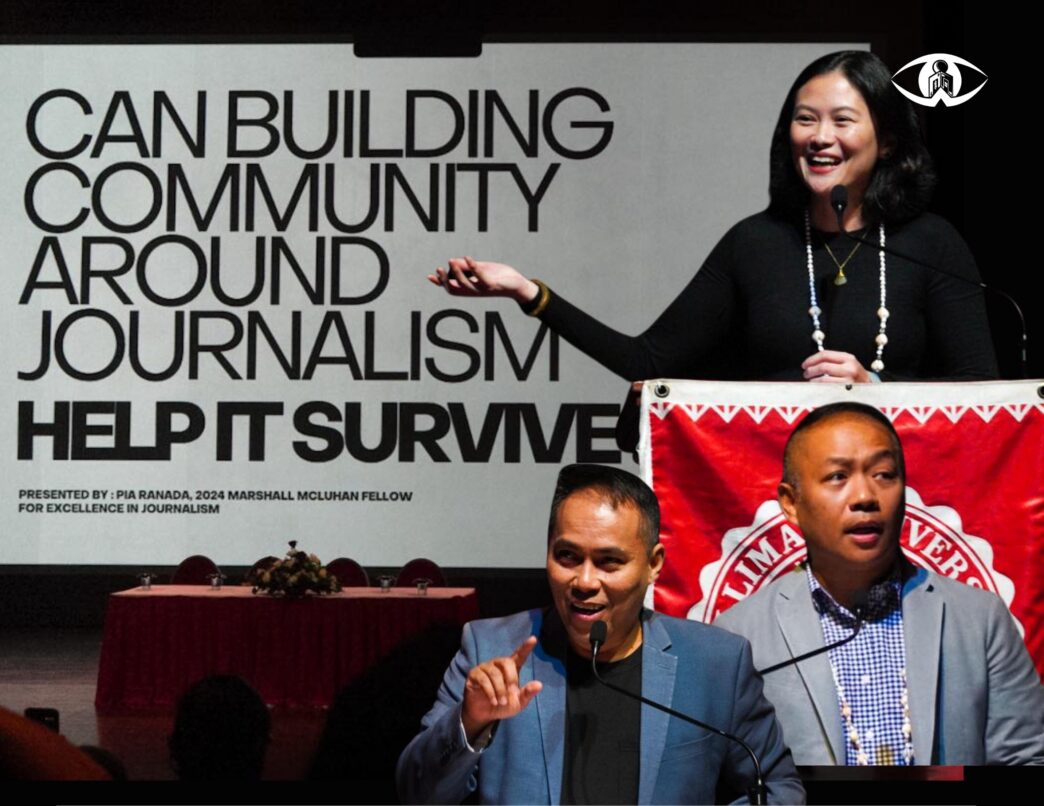
Rappler community editor Pia Ranada highlighted citizen-powered initiatives and fact-based reports on mobilizing protests and movements during the 2026 Marshall McLuhan Forum for Responsible Media last Feb. 3 at the Luce Auditorium.
Her talk, titled “Can Building Community around Journalism Help It Survive?”, discussed how the media industry can rebuild trust through community-driven journalism amid the fight against artificial intelligence and declining revenues.
Ranada, a senior reporter who covered the Duterte administration, explained that journalism serves as a partner to other institutions in moving people into the streets by holding powerful and abusive people accountable.
“Journalists should be part of that advocacy for good governance, not advocating for any specific candidate but just for the idea of good governance and honesty in government,” she said.
Ranada cited Rappler’s #FloodControlPH initiative, a participatory journalism project in which citizens drive investigative reports on corruption in flood control, as a way to involve people and force those in power to act.
The initiative operates through a public chatroom in the Rappler app, where citizens submit first-hand accounts while Rappler’s teams verify and integrate to investigations of potential flood control corruption.
“Citizen reports actually made it possible for us to reach 12 out of the 18 regions in the country. We were also able to get a lot of views from the videos we made based on our investigative reports on flood control,” she said.
Government officials respond to impactful stories, and political dynasties address public complaints through these crowdsourced reports, which Ranada considered a factor in increasing public trust.
A December 2025 Pulse Asia survey revealed that a majority of Filipinos view the media as the “most trusted institution to address flood control corruption.”
Current era of journalism
Moreover, Ranada pointed out that the current “era of journalism is dying” and that it has to evolve and be reinvented to meet the current challenges of society.
As AI-generated content enters online platforms, Ranada stressed that journalism will survive because it is a human-centered craft that supplies information and forges connections that AI cannot provide.
“AI cannot interview a victim and ask them about their experiences, AI cannot connect government documents to actual human experiences, AI cannot cover typhoons [or] communities being relocated to outside areas,” she said.
Meanwhile, the 2024 McLuhan fellow also touched on newsroom advertising revenue and how it is failing as a reliable source of income as social media and technology platforms become more targeted.
“Journalism was never free, but the cost was absorbed by the advertisers. Because may Facebook na or may Google, they use trade to the big tech platforms and advertise there […],” Ranada explained.
According to her, the best way to fight back against this powerful technology is to “go back to the roots of being human” by doing regular interviews on the ground.
“If it’s powered by technology, it would, but one thing that should never disappear is that heart, that compassion with your fellow man, and that desire to connect humanity,” she furthered.
Ranada was named one of The Outstanding Young Men of the Philippines in 2025 and the Marshall McLuhan Fellow for Excellence in Journalism by the Center for Media Freedom and Responsibility and the Canadian Embassy in the Philippines in 2024.