
By Ryanne Czarina Villegas
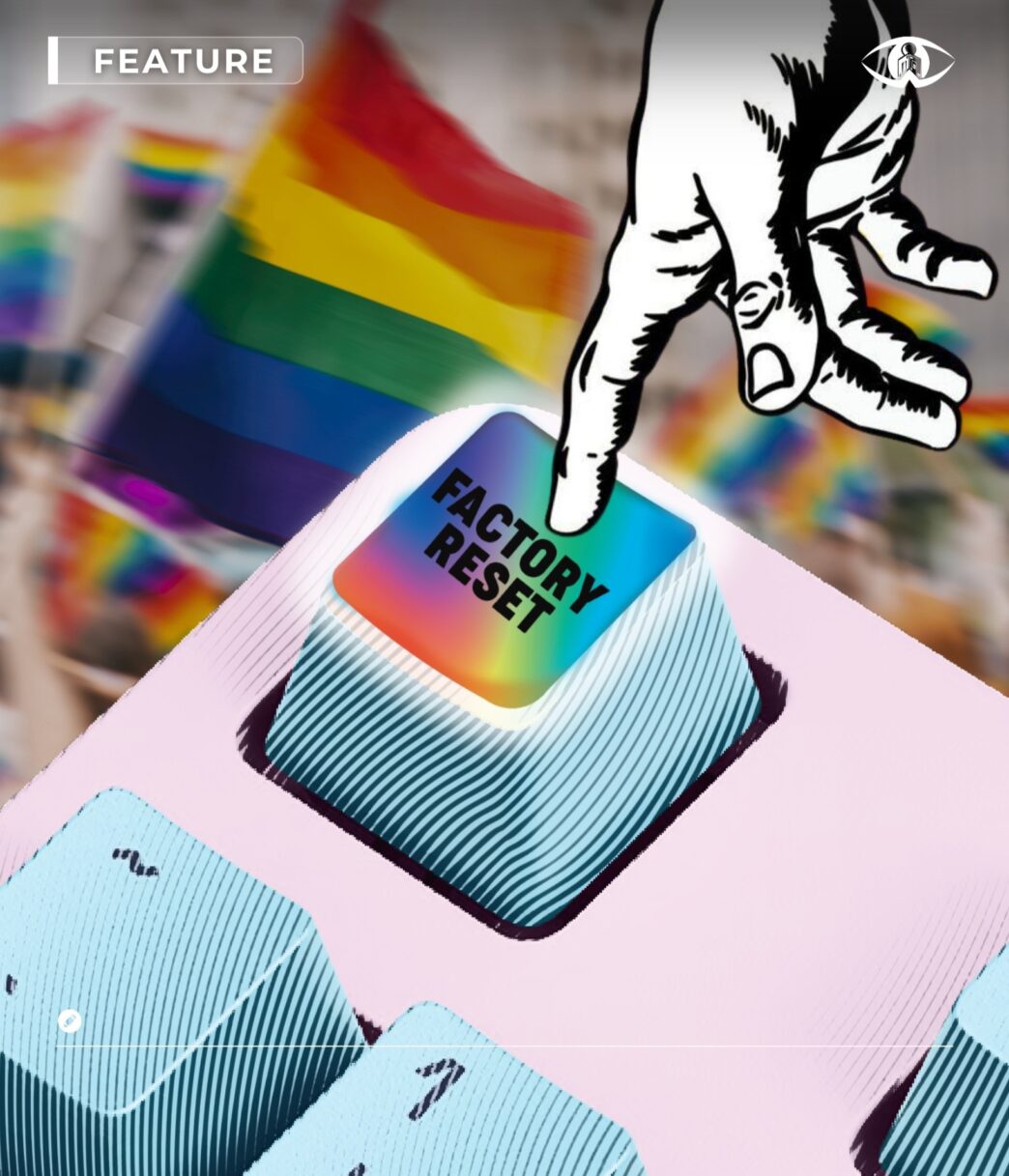
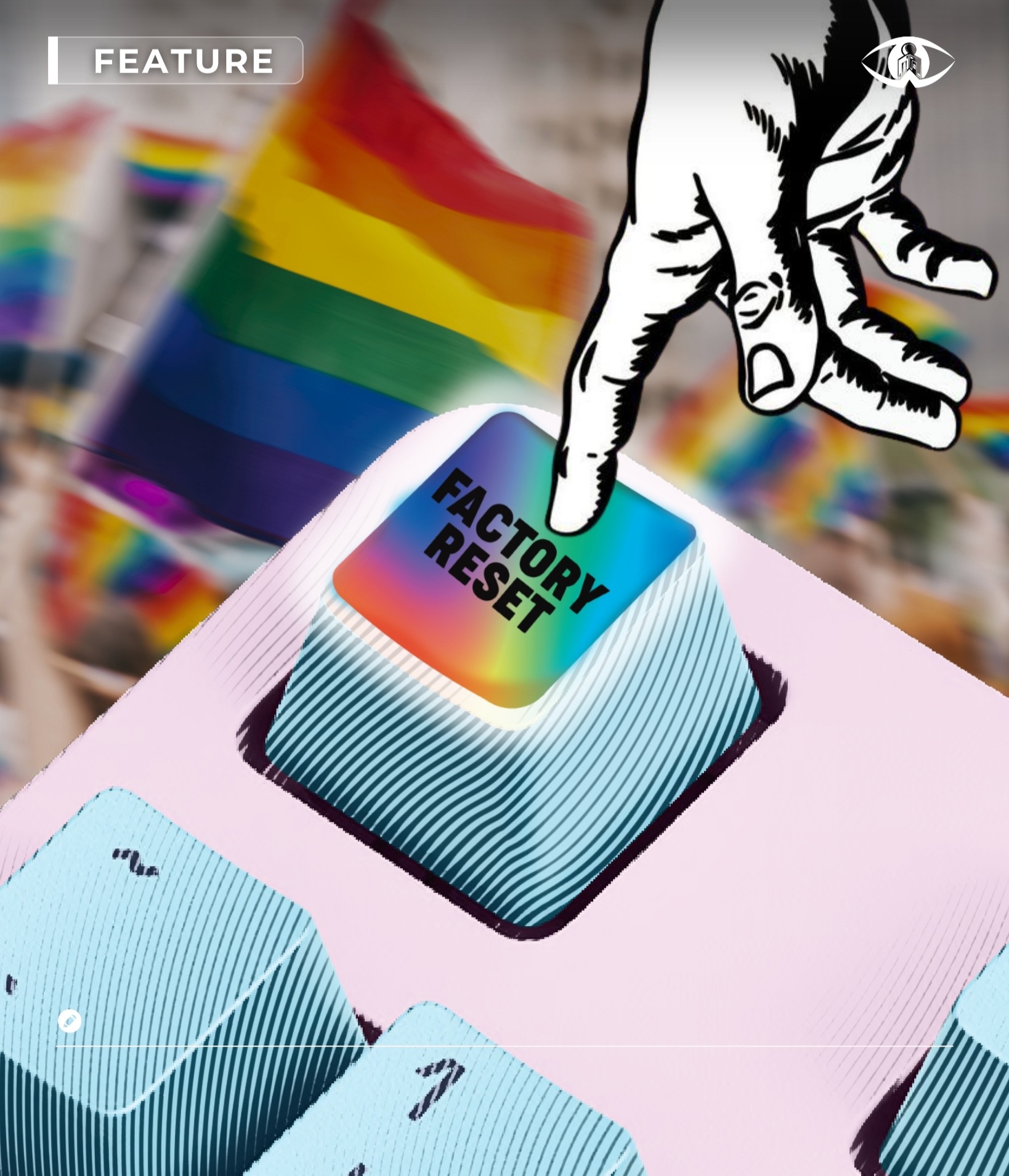
Some trends feel hilarious at first, an inside joke for a minute before you scroll past it. But the “factory reset” trend on Tiktok is not like others.
What started as people using catchy audio and posting life changing videos has quietly become something a lot more harmful. It (re)formed a narrative that suggests queerness is temporary, a glitch that can be tweaked back to default, being heterosexual. And that’s not funny for a lot of people.
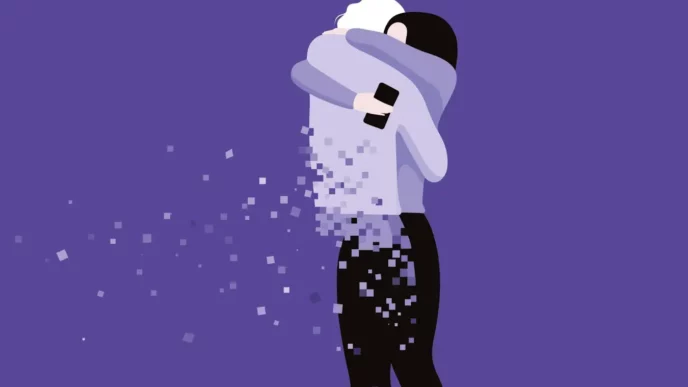
This trend involves people saying they’ve gone through a “factory reset” after a period of identifying as gay or lesbian by showing themselves with someone of the opposite sex, and implying they are now “straight again.”
Such phrasing might seem like just a creative way to tell a story, but the implication is clear: queerness is something you can just rewind out of. It buys into the tired assumption that straight is the “original” setting, and queerness is just a “detour” you can undo.
You do not have to scroll far in the comments to see how many in the community feel uncomfortable with this. Some people describe it as something that reduces a lived experience to a punchline.
One comment said it “erases your entire queer identity” because the narrative almost always positions straightness as the correct endpoint, not one of many valid identities. Another person pointed out how the trend feels like a modern take on the old “Pwede ka pang ituwid” mentality—the idea that queerness can be “fixed.”
What’s especially concerning is how easily this kind of content gets treated as harmless fun. When you joke that someone can be “reset,” you invite people to think sexual orientation is malleable on command, or that it is just about the experiences you happen to share online.
But sexuality and identity are not settings you flip. They are parts of a person’s story, shaped by who they are, not by what is trending.
Online TikTok personality, @NEYOW, stated in a video, “Factory reset? No. Hindi phase ang pagiging bakla, wag kayong weirdo. Hindi kami kulang. Hindi kami kailangang i-fix. At lalong hindi namin kailangang i-factory reset. Walang term na “balik loob” dahil hindi naman kami naligaw ng landas.”
Another TikTok creator, @euwan ko sayo, also expressed how this factory reset trend is “weird, problematic, and doing a lot of harm to the LGBTQ+ community.”
Many more digital creators have spoken up about the matter as well. These are not just influencers, they are people using their platforms to push back against exactly this sort of reductive thinking. People are free to identify as how they choose to, and love who they do.
And let’s be clear, there’s nothing wrong with people exploring who they are, or even realigning how they identify over time. Sexuality exists on a spectrum—fluid, personal, and capable of shifting over time. Humans change, feelings evolve, and many people come to a deeper understanding of themselves as they grow.
Because love, in all its forms, is not something that you can just simply reset. It can be messy, vulnerable, and subject to all sorts of changes. For a lot of people, it’s the thing that helps them feel seen for the first time. That’s not something to mock or overwrite. So if a TikTok trend gets people talking about identity, great, but let us not make the punchline someone’s authentic self.
At its heart, the “factory reset” trend is a reminder that humor and virality matter, but context matters even more. Queerness is not a software bug, and people are not devices we reboot for clicks. Love, whether it looks straight, queer, bi, or anywhere in between, is love. That is reality. And unlike trends, it is not going anywhere.
What about you, Sillimanian? What do you think about this whole “factory reset” trend?