
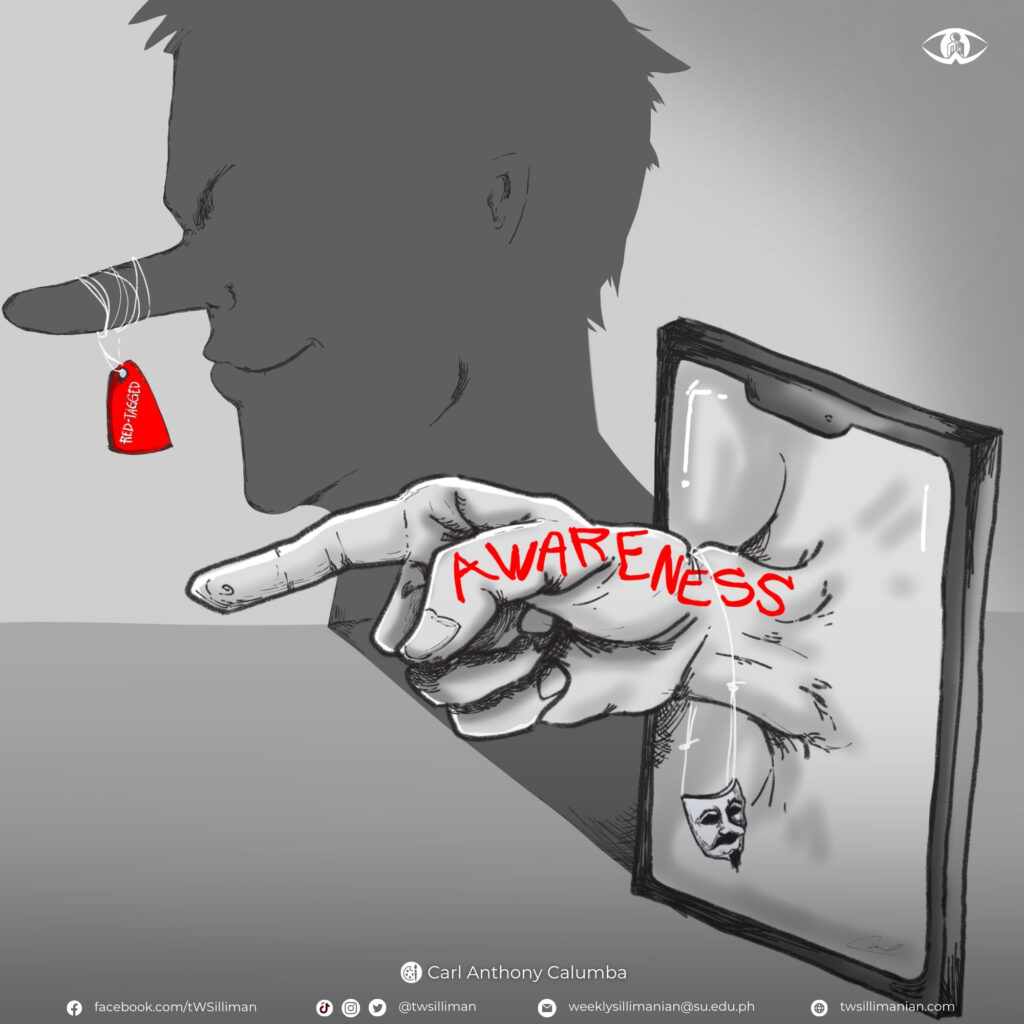
In recent years, red-tagging has become more dangerously accepted in the Philippine media landscape. It often conceals itself as an act of concern, patriotism, or in the case of one particular page, awareness. This trend is alarming not only because it makes leeway for misinformation, but also actively legitimizes violence against the press—even at a university scale.
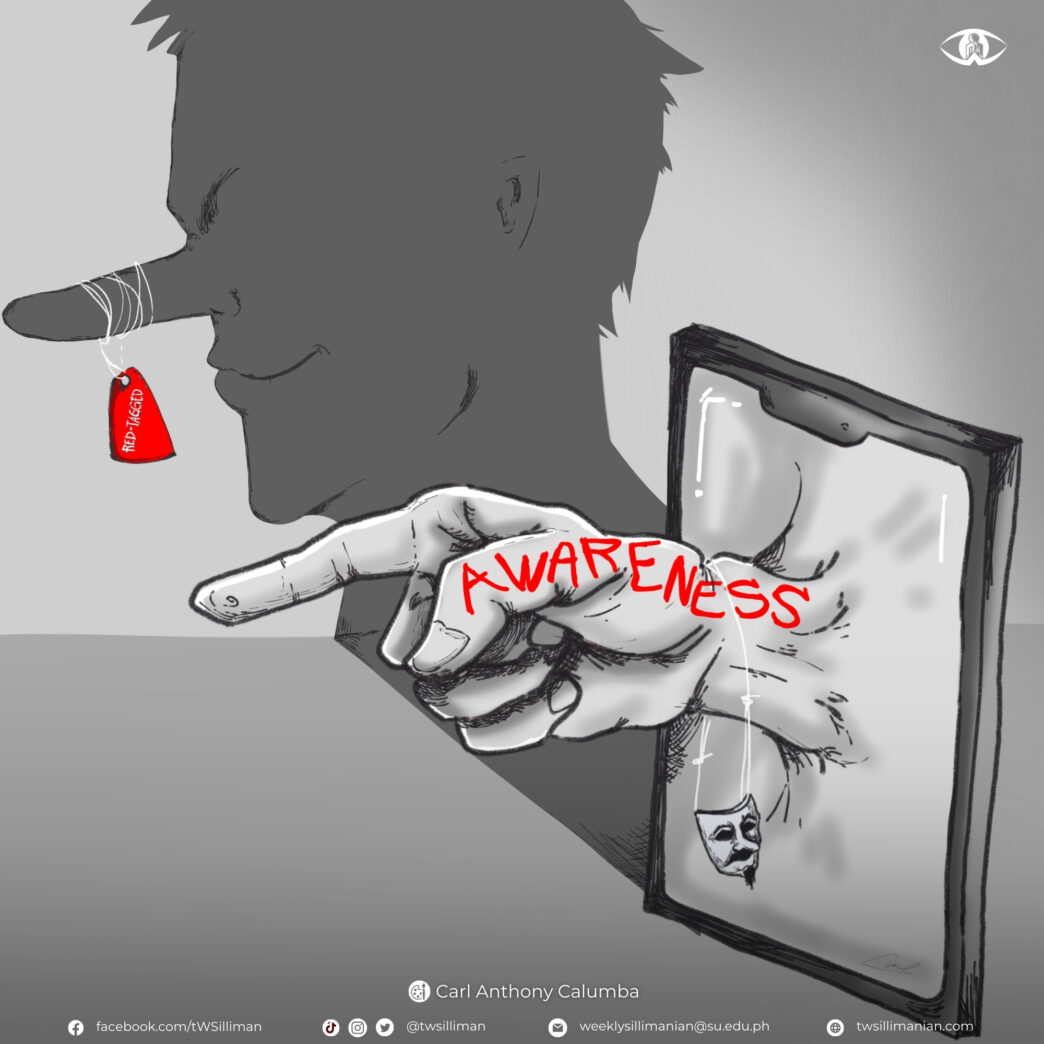
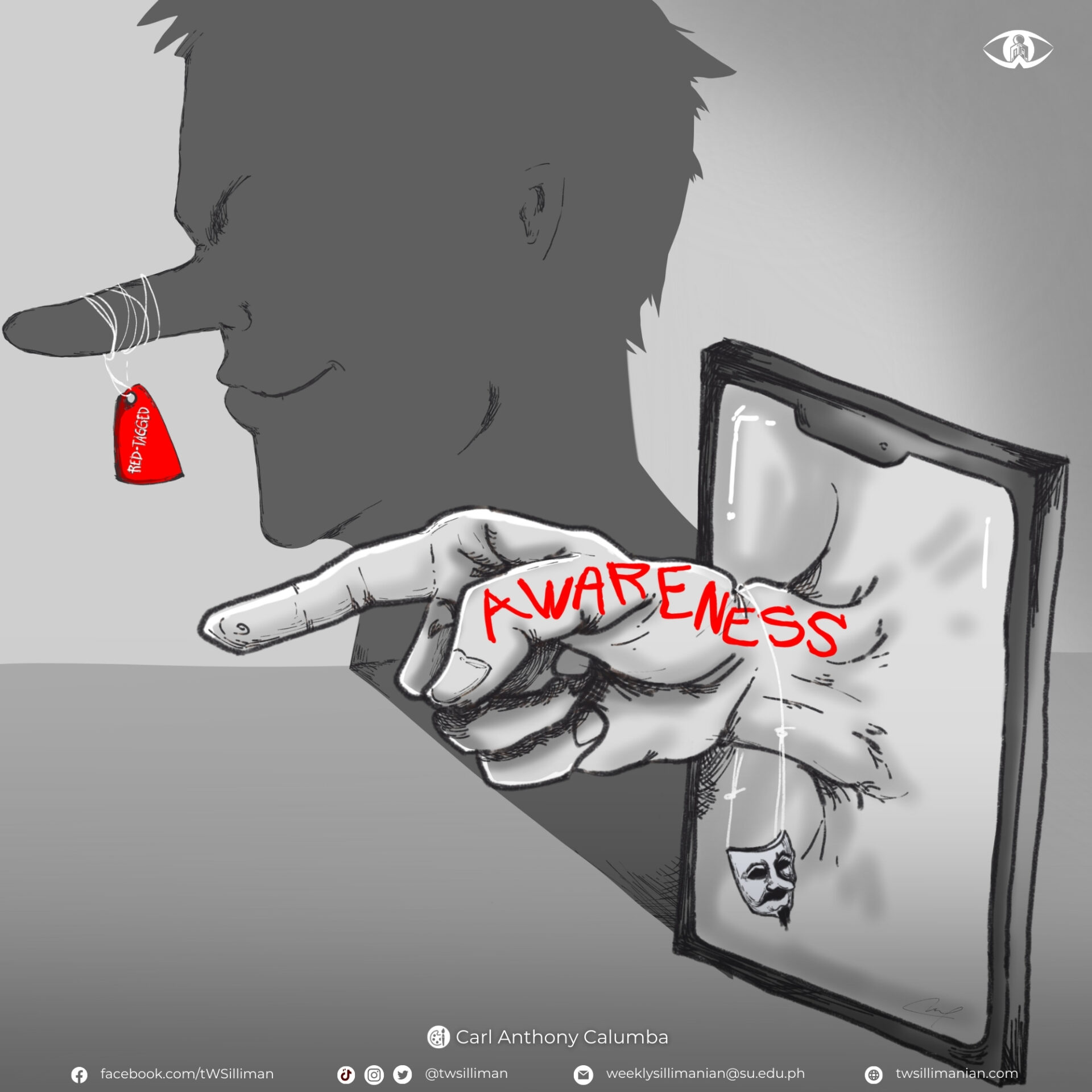
Last Jan. 20, a post by Dumaguete Awareness explicitly endorsed red-tagging in Dumaguete, accusing local universities of communist and terrorist recruitment. It branded educators as “idiots” or “paid ideologues” all the while not being able to offer legitimate evidence—only harboring fallacies rooted in fear-mongering. This poses an irony in a city that prides itself for being a university town yet torments its educators for progressive teaching.
What makes this post also distressing is not only in its content, but the platform itself. Boasting thousands of followers who are susceptible to the information it shares, pages like Dumaguete Awareness could shape public opinion and enable the idea that critical thinking and progressive education are enemies of the republic.
This rhetoric does not exist in a vacuum. As well as the logic that labeling professors and students as communist threats justify the attacks on journalists. Such is the case of the recent arrest of Negrosanon journalist Erwin “Ambo” Delilan.
Delilan is reputable for being a vocal critic of corruption and climate change. Recently, he was arrested without prior notice of a complaint and was, instead, presented a vague warrant alleging “unjust vexation.” This parallels the broader case of weaponizing laws to tape the mouths of critical voices—as seen throughout history in the cases of Maria Ressa, Frenchie Mae Cumpio, and even campus journalists like Jacob Baluyot.
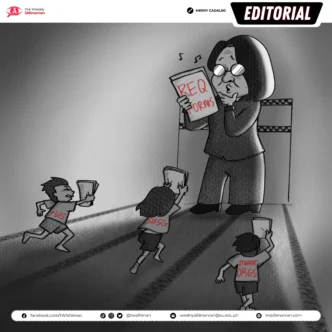
When red-tagging becomes widely accepted, especially in digital spaces, it fuels an environment where such arrests become justified. It conditions the Filipino people to view journalists not as the government’s watchdogs but as mere threats. This ultimately makes journalistic repression easier to rationalize. As for campus publications, implications become seemingly dire: censorship, intimidation, budget cuts, and legal harassment become tools to silence student expression under the guise of “peace-keeping.”
The page “Dumaguete Awareness” operates in the shadows of anonymity. If their goal were truly to make the public aware, they should have the courage to sign their names to their accusations. Instead, they hide behind a screen.
However, silence is not an option. The Weekly Sillimanian urges the Dumaguete public to stay informed and take a stand against red-tagging in all its forms alongside disinformation that enabled repression against the media. Anonymous red-taggers must be called out for creating false and dangerous accusations.
Awareness is achieved only if its intent is to inform, not endanger. The public must not only ignore disinformation, they should report it. Local authorities must also distance themselves from anonymous red-taggers.
Nevertheless, true awareness begins with the courage to call out a lie.