
By Lara Charmaine Lagorra
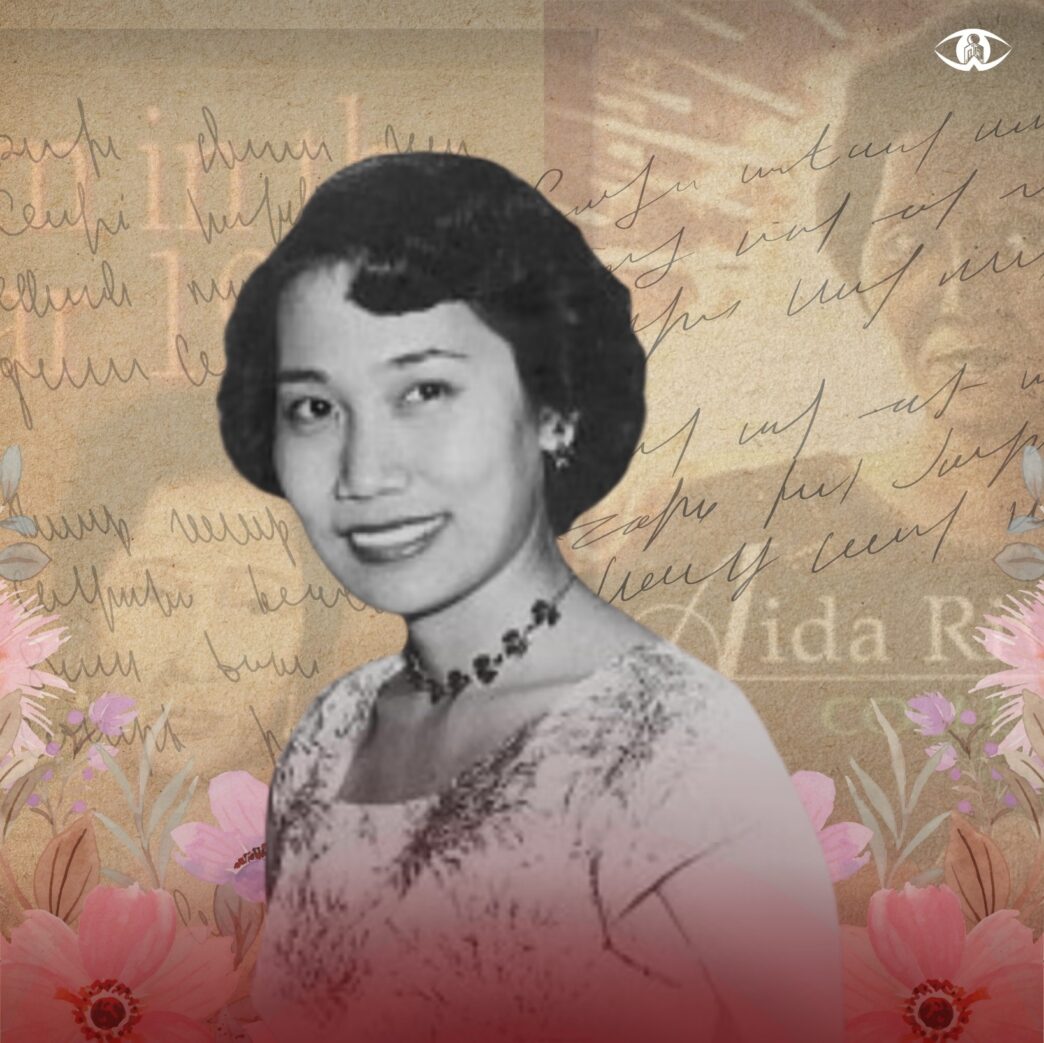
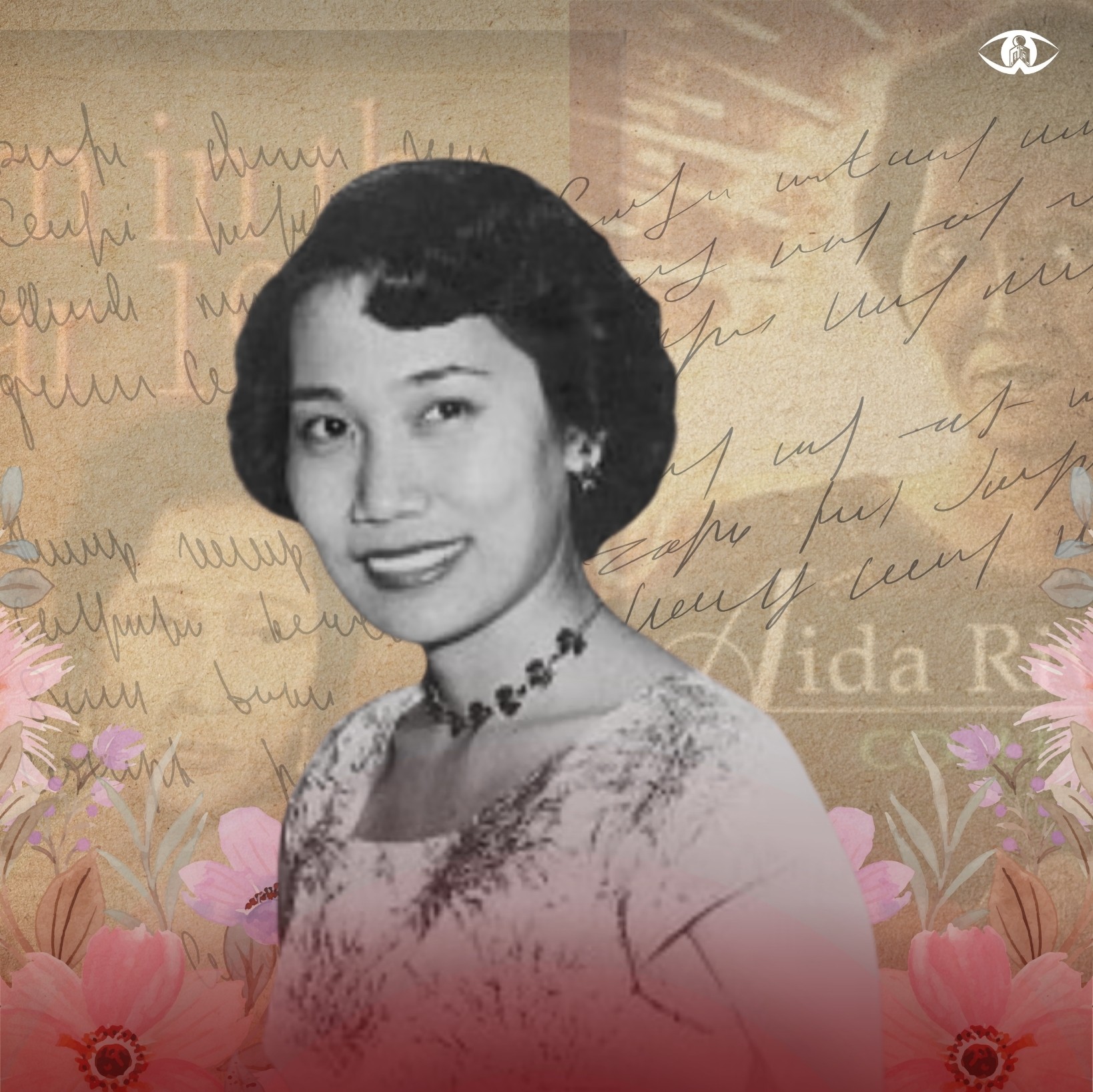
On January 18, pages turn in silent tribute as the world of literature mourns a gentle soul. An educator, creative writer, playwright, theatre artist and timeless beauty whose smile and influence endure.
She is remembered by friends and mentees as deeply human: someone who shared beers, laughed freely, and guided with warm wisdom.
This is the legacy of Aida Rivera-Ford.
Born in Jolo, Sulu, in 1926, Ma’am Aida began her story when her father was assigned as a judge. Her family moved frequently from Vigan to Samar, Dumaguete to Sorsogon, and finally to Bacolod, when World War II occurred.
During those times, Ma’am Aida endured deprivations of freedom, with moments of risks, fears, anxiety, and the tragedy of losing property and loved ones—including a brother of hers.
But in that time of darkness, she held onto her candle of hope. The hope to regain the freedom to express without fear of repression.
The same hope that guided her when her mother placed her on a rice truck over the dark mountains of Bacolod to pursue an English degree at Silliman University.
It was in the campus by the sea, whose corridors and sea-breezed afternoons fed her imagination, that pieces of her hopes became reality.
In Silliman, Ma’am Aida began as a theater artist in a close-knit scholarly community of shady trees, avenues, and a park amphitheater. They staged the first Shakespeare plays of “The Taming of the Shrew,” in 1946 where she played Kate the Shrew, and “As You Like It” in 1948 where she transformed from Lady Rosalind to the page Ganymede in the Forest of Arden.
In the later parts of 1948, she began writing poetry. This love for the literary art continued to grow, leading her to co-found Silliman’s student literary publication with Cesar Amigo, which they named Sands and Coral.
The humble beginnings of Sands were shared ideas over steaming coffee in the living room of adviser Rodrigo T. Feria and his American wife, critic Dolores Stephens Feria. They did all of the work with no office and edited at cafeteria tables, in the library, or even during picnics.
It was here that Maam Aida believed young writers needed a serious, demanding space where literature was treated as a craft, not just a school requirement. She and her colleagues saw that the goal for the publication was to uphold high literary standards, stimulate creative thinking, and foster appreciation for serious student work.
Seventy-three years later, it is now recognized as Asia’s oldest literary journal and a pioneering force in Philippine literature.
To Ma’am Aida, the publication was a way to shape the literary culture at Silliman, a vision she later applied in Mindanao.
In 1980, she co-founded the Ford Academy of the Arts and taught at Ateneo de Davao, helping lay the foundations of Mindanao’s literary and arts landscape, paving the way for generations of Mindanaoan artists.
For contributions from the country and abroad, she received various awards such as the Outstanding Sillimanian Award for Literature and Creative Writing, Philippine Government Parangal for Post-War Writers, a National Fellow title, Gawad CCP awardee, and Datu Bago laureate.
Ma’am Aida’s books ensure her voice endures in Philippine and Mindanaoan literature. Her most anthologized and widely taught works like “The Chieftest Mourner” and “Love in the Cornhusks” stapled in classrooms, critiques, and were even developed into films by Filipino students for projects that explore the complex Filipino identity and relationships.
But her legacy extends far beyond tributes, awards, or publications. She always saw potential in people. Whether it was in acting or writing, Maam Aida’s down-to-earth yet firm mentorship inspired and guided her mentees in honing their skills. More than just teaching the craft, she left behind lessons of life’s moral struggles and hardships, and the hope that comes despite it all.
She was an example to her students who taught not only through lectures and instructions, but also through actions. Above all, she taught them the belief she lived by: that shared joy always eases work, no matter the obstacles.
What she left behind is not only a body of work, but a way of writing grounded in discipline, integrity, and lived experiences. Through her work, her vision of hope continues to guide aspiring artists across the country.
After 99 years of passionate storytelling, Maam Aida leaves behind words that continue to teach and shape the world of literature. In every story she shaped and in every voice she helped form, her legacy continues on. May she rest in peace.